Tuesday, May 22, 2012

Turn the Dial... NOW!

Word of the day : shanghai : to put by trickery into an undesirable position

Happy Tuesday, all! 

Today' soul track...


The Delfonics, y'all!  I first heard "Didn't I (Blow Your Mind This Time)" on the soundtrack to Jackie Brown and was convinced that it was one of the most beautiful, gorgeous songs I had ever heard.  I still do think that!  The song, which won the group a Grammy for Best R&B performance by a duo or group, was released as a single in 1970.  It went all the way to #10 on the Billboard charts.

The Delfonics were one of the finest of the Philly Soul artists - which included The O'Jays, Teddy Pendergrass, The Stylistics, Patti Labelle, Gamble and Huff, The Spinners.  These groups and artists flourished in the early 1970s, the songs driven by silky horns, strings, lush harmonies.  The Delfonics'  biggest song was probably "La La Means I Love You."

http://www.youtube.com/watch?v=9NL1YPVnKDc    


I'm always curious as to what rare bird alerts have been posted around the state of Georgia; every once in a while, I post pictures.  I haven't in a while, so that needs to be amended! 

In the last month, the following birds have been spotted in the state: 


Gray kingbird.  Seen at St. Simons Island.   
- Vocal, conspicuous big-billed songbird.  Typically found in mangroves and coastal woodlands. 


Glossy ibis.  Seen at Ocmulgee National Monument in Macon. 
- A dark wading bird with a down-curved bill.  Typically found in marshes along the Atlantic Coast. 


American avocet.  Seen around Cartersville, Georgia (metro Atlanta). 
- An elegant, striking shorebird with long legs and a long, upturned bill.  Found in shallow fresh and saltwater marshes. 


Greater white-fronted goose.  Seen in Columbus. 
- A bird that is usually only found west of the Mississippi in this country, the gray-bodied goose, like most other geese, bonds and stays together with its mate for long periods of time.  In the non-winters, it can be found around the tundra wetlands. 


Nashville warbler.  Seen at Kennesaw Mountain National Battlefield Park, Atlanta. 

- A tiny, insect-feeding songbird mostly yellow with a white eyering, the warbler (first observed in Nashville in 1811) lives in second-growth deciduous or mixed forests, with scrubby undergrowth. 


Happy 168th birthday, Mary Cassatt! 

Arguably the most famous female (and American) Impressionist, the retiring, socially shy Cassatt spent most of her working life in Paris, often living with her family - specifically, her sister.  The whole family was somewhat socially reclusive, and many of Cassatt's well-known paintings are of her sister, tinkering around the home, reading, knitting, sitting outside in the garden.  Cassatt specialized in the social and private lives of women. 

She was born in Pittsburgh and traveled abroad frequently as a child, exposing herself to great foreign artists (Corot, Delacroix, Ingres).  While living in Paris, she frequently exhibited at the Salon, but was later introduced by Degas to the Impressionists.  She remained good friends with Degas and non-Impressionist John Singer Sargent.  Neither she nor her sister Lydia ever married.

She is now best remembered for her paintings dealing with the theme of mother and child and her paintings of her sister in the Cassatt home in Paris.


The above work is is 1879's Cup of Tea (oil on canvas).  In it, Cassatt's sister Lydia is seen observing a social ritual - tea time.  Note the way the pink of the dress is seen in a reflected light, as opposed to the pink of the arm chair.  The shimmery light highlights the serenity of the scene.  (The painting is housed at the MET in New York City.)


Finally...

5 or 10 Things for the week of May 20-26:
  
10 Overrated Rock and Roll Songs

1. "Brown-Eyed Girl," Van Morrison

"Sha-na-na-na..." SHUT UP!

2, "(I Can't Get No) Satisfaction," The Rolling Stones

Just a repetitive, boring song.  No idea why it's regarded as the best of the Stones.


3. "Wonderful Tonight," Eric Clapton

Just sickening. 

4. "Black Magic Woman," Santana. 

Doesn't set a mood.  Drawn-out, dated.  Santana's guitar playing is generally generic-sounding. 

5. "Rainy Day Women," Bob Dylan. 

They'll stone you when you're trying to be so good, yadda yadda yadda... Get on with it. 

The man of 1000 songs.  One-third of which suck.

6. "Fame," David Bowie. 

Even the chorus isn't that good. 

7. "Who Are You" The Who. 

Sure, we know it's the CSI song.  But does anyone actually like this song?  Can anyone stand to listen to it in its entirety? 

"Who-who, poo-poo!"
8. "Get Back," The Beatles. 

I hate this song. 

9. "Smells Like Teen Spirit," Nirvana. 

Yep.  Grunge has aged very badly. 

10.  "I Still Haven't Found What I'm Looking For," U2. 

I could have included any of the following: "Another Brick in the Wall" by Pink Floyd, "Killer Queen" by Queen, "Sweet Child of Mine" by Guns 'n Roses, Elvis Presley's "Love Me Tender," Bruce Springsteen's "Born in the USA."  All of them are very one-note. 


Images taken from:

https://blogger.googleusercontent.com/img/b/R29vZ2xl/AVvXsEj81OCenFE_9aFeMZGc3bdEhKfnCzjNf0Tdds58YCbe-TZmbThrSYHsVgsbP5Yhv8vq2fqwJk8Q6zr1JHnvnd2dpz28eRrf1_ajih8HTCfYUIUgmeECYfD3h6hMsWPUs84SjrvrC52Upfc/s320/delfonics+-+Didn't+I+album.jpg

http://www.fs.usda.gov/Internet/FSE_MEDIA/fsbdev3_042540.jpg

http://www.oceanwanderers.com/GlossyIbis.1413.JPG

http://naturemappingfoundation.org/natmap/photos/birds/american_avocet_8877np.jpg

http://www.outdooralabama.com/images/Image/GreaterWhitefrontedGoose.jpg

http://www.roysephotos.com/zzNashvilleW20D.jpg

http://static.ddmcdn.com/gif/paintings-by-mary-cassatt-3.jpg

http://www.clashmusic.com/files/imagecache/big_node_view/files/images/van%20morrison.jpg

http://img.dailymail.co.uk/i/pix/2007/10_04/ericcDM0111_468x410.jpg

http://www.8notes.com/wiki/images/250px-Bob_Dylan_by_Daniel_Kramer.jpg

http://starling.rinet.ru/music/sleeves/zap_who.jpg

Information taken from:

http://birdingonthe.net/hotmail/EAST.122230257.html

http://floridabirdingtrail.com/index.php/conservation/bird/gray_kingbird/

http://www.allaboutbirds.org/guide/Glossy_Ibis/id

http://www.allaboutbirds.org/guide/american_avocet/id

http://www.allaboutbirds.org/guide/greater_white-fronted_goose/lifehistory

http://www.allaboutbirds.org/guide/Nashville_Warbler/lifehistory

http://www.marycassatt.org/

http://www.metmuseum.org/toah/works-of-art/22.16.17

Monday, May 21, 2012

Juh-Juh-Juh-Jive Tallkin!

Word of the day : boniface : the proprietor of a nightclub, hotel, or restaurant

Julia had a rough day yesterday but she is almost back to normal.  Talk about an annoying stomach bug!

If you're interested in Classic Rock, check out one of my uncle Dennis' websites, devoted solely to the music he loves:

http://www.theclassicrockmusicsite.com/

It's a good site, with plenty of links to songs of excellent sound quality.  And I was reminded by the site of bands and artists I really liked (and often forget that I do): Maria Muldaur, Bonnie Raitt, Dire Straits.

Nice job!


Monday means an Author Profile and this week we will focus on

Dennis Lehane


Born: Boston, 1965.

Career:  Lehane grew up and still lives in Boston, where all his fiction is set.  His parents were working-class emigrants from Ireland.  Lehane's passion for writing was fostered at Florida's Eckerd College (in St. Petersburg) and, later, as a grad student, at Florida International University in Miami.  Before the publication of his first book, 1994's A Drink Before the War, Lehane held a number of jobs: social worker, teacher, a counselor for mentally handicapped and abused children, tractor-trailer loader, valet, limo driver, bookseller.

In 1994, he began his foray into crime writing with a series of books featuring Boston private eyes Patrick Kenzie and Angela Gennaro: A Drink Before the War, Darkness, Take My Hand (1996), Sacred (1997), Gone, Baby, Gone (1998), and Prayers For Rain (1999).

Lehane was recognized early on as one of the finest noir writers around.  His popularity really hits its peak in the early 2000s, with Mystic River (2001) and Shutter Island (2003).  Both of these novels - along with Gone, Baby, Gone - were adapted into stunning, acclaimed, major Hollywood movies: Mystic River the first of them, an Oscar-winning film directed by Clint Eastwood, with laurels given to Sean Penn and Tim Robbins; Ben Affleck's gritty, forceful Gone, Baby, Gone, starring Casey Affleck, Michelle Monaghan, Ed Harris, Morgan Freeman, and an Oscar-nominated Amy Ryan; Martin Scorsese's crazily intense, stormy, brilliantly-visualized Shutter Island, with a never-better Leonardo DiCaprio, Mark Ruffalo, Ben Kingsley, Michelle Williams, and Patricia Clarkson.

Lehane also was one of the writers on HBO's stunning, majestically-reviewed cult favorite The Wire (2002-2008), about the Baltimore drug scene as a seen from the perspectives of a wide array of characters.  It's one of the best shows ever produced for television. 

Noted Books:  Mystic River, Gone, Baby Gone, Shutter Island, and 2008's epic The Given Day, set in 1918-1919 Boston, concerning race relations, Babe Ruth, the Boston Police Strike, returning WWI soldiers.  It's a masterful, enthralling novel, and Lehane plans to write a few sequels to it - or, better put, continuations of the story and the storylines of the era.  

Themes, Styles, Etc:  Lehane grew up in an Irish neighborhood, in a loving home, but witnessed violence in his city, mostly due to racial tensions.  His books are violent, intense, suspenseful.  Loyalty, honor, moral ambiguity, corruption, and the duality of good-and-evil are themes that appear time and again.  Boston is always a major character in his books, besides be the setting: the city's enclaves come alive, its specific, niche-y neighborhoods, the class tensions, the gentrification, the codes.  His plots are usually complex buy never labyrinthine, the characters awash in all sorts of grey.  
Why You Should Read Him:  His novels are police procedurals that also function as moral evolutions of haunted, conflicted characters making their way through a world, a city, of entrenched violence.  You feel spent after having read him, as satisfied and relieved as you would any other modern writer, be it a crime writer or an author of literary fiction.  He has a great ear for dialogue and his books are well-paced and unique; he writes with care, never rushing to get his next novel out, which makes each Lehane book feel like a gift.   

Lehane's influences include: Jim Thompson, William Kennedy, James T. Farrell (of the great Studs Lonigan trilogy), Donald Westlake, George Pelecanos, Pete Dexter.  He is an avid reader of Entertainment Weekly and Harper's.

Books I Would Recommend: Mystic River, Shutter Island (both *****), Gone, Baby, Gone and The Given Day (both ****).  Sacred (***) is good too.

Books I Want to Read: Prayers For Rain, 2010's Moonlight Mile (a follow-up to Gone, Baby, Gone) and October 2012's not-yet-released Live by Night.

Author's Website:   http://www.dennislehanebooks.com/

    
Movie Review:


With the exception of The Ugly Truth, Katherine Heigl movies are never quite the abominations critics have a tendency to liken them to, and the same goes with One For the Money (2012), a harmless, bland adaptation of the first in Janet Evanovich's series of bestselling books about New Jersey bounty hunter Stephanie Plum.  As played by Heigl, Plum certainly has some klutzy, in-over-her-head appeal, and Heigl certainly has a gawky, pushy charisma, which makes the audience hope that if this intriguing character is revisited - Evanovich has written, to date, eighteen novels about Plum, so there must be something fans finds irresistible and durable about her - it will be in a jazzier, more exciting story than the one here, which finds Plum trying to haul in a police officer who has jumped bail after being suspected of a killing, who also happens to be the charmer who de-virginized and then rejected Plum in high school (he's played by Jason O'Mara).  The movie, which is easy enough to watch without ever being particularly funny or exciting, has a goofy plot and plays out like an overextended, tacky, visually neutered episode of a USA network show, not horrible, but never very good.  Filmed in some junky locations around Pittsburgh.  The supporting cast isn't anything to write home about - a critique that extends to Debbie Reynolds, who plays Plum's annoying grandma.   

(*1/2)

Today's soul track:

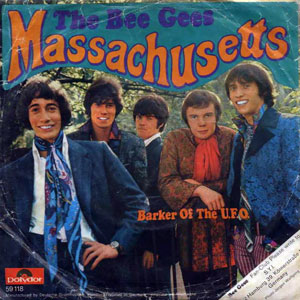
Well, it's not a soul song per se, but in honor of the death of Robin Gibb yesterday, I think it's only affair to devote today's song to him:


http://www.youtube.com/watch?v=Mc5oqjFsT5g

Robin sang lead on this 1968 song (from the group's album Horizontal), which was written for the group The Seekers, the Australian folk-pop group ("I'll Never Have Another You," "Georgy Girl"), who broke up before they could record it.  

The Bee Gees were an underrated band, a true guilty pleasure for me.  I think it's a shame that when we think of them, we think of disco, but that's all fine too because their songs from the Saturday Night Fever era and soundtrack were pretty great, no?  But earlier songs by the band, including "I Started a Joke," "Words," "I've Gotta Get a Message to You," weren't half-bad either. 


Images taken from the following:
http://hollywoodandfine.com/interviews/wp-content/uploads/2010/02/lehane.jpg
http://i33.fastpic.ru/big/2012/0418/14/c262e7092df352d987b7a4c7447b6b14.jpg
http://upload.wikimedia.org/wikipedia/en/7/73/BeeGeesMassachusetts.jpg

Information taken from:

http://www.dennislehanebooks.com/

Sunday, May 20, 2012

Horses, Rhinos, Bears, oh my!

Word of the day : hypnagogic : of, relating to, or occurring in the period of drowsiness immediately preceding sleep

For our soul track today...


"I'm So Tired of Being Alone," a 1968 song not released until 1971, on Al Green's album Al Green Gets Next to You.  Rolling Stone ranked it #299 among the list of the 500 Greatest Songs of All Time (in 2011).  Everyone knows the great R&B singer Green: "Let's Stay Together," "Take Me to the River," I'm Still in Love with You," "Love and Happiness."  Born in Forrest City, Arkansas in 1946, Green started singing early on and had his own bands throughout  his teenage years.  He came into his prime working with producer Willie Mitchell for Memphis' Hi Records in the early seventies.  His 1972 album Let's Stay Together is regarded as one of the all-time greats.  Green is in the Rock and Roll Hall of Fame and still tours; I've had the privilege of seeing him.

http://www.youtube.com/watch?v=Tdw7kxD8eUc


Julia's been under the weather this weekend, and seems to be coming out of it.  It's been a tough last couple of weeks for the Fischer family, but we all had a good time yesterday at a luau raising money for Gabriel's class.  Gabriel had a ball, zigzagging all over the auditorium like a daredevil.

Julia starts summer classes tomorrow, teaching two two-hour classes a day Monday through Friday for five weeks.  Wish her luck!

Movie Review


Cave of Forgotten Dreams, Werner Herzog's 2011 documentary about the Chauvet Cave in the south of France, site of the (to date) oldest prehistoric cave paintings ever discovered, is a wondrous film, meant and deserved to be seen by everyone.  (Julia is showing it in class this week.)

Herzog's nonfiction films can be quirky and niche-y, often stylized and ponderous; his 2007 doc Encounters at the End of the World, about workers in Antarctica, drove me crazy because I thought Herzog only sought out the looniest, "idiosyncratic" of individuals, which served Herzog's purpose perhaps, but not ours - it was too flaky.   

This one is a real winner.  Herzog takes us inside the caves (the entrance of which, due to a landslide, had been hermetically sealed off for thousands of years) and allows us to share his wonder and awe at these rock paintings, the earliest forms of visual art known to man.  It's not hard to be amazed and astonished by what we see and Herzog's crew, working under restricted conditions, do a marvelous job at showing us everything they can, clearly and respectfully.  As the camera looms over the rhinos, horses, bears, and insects, one doesn't have to be an art historian to feel, grasp the importance and significance of what the long-ago people were trying to communicate.  

The people he interviews are informative, funny, and Herzog's voice-over reflections are appropriate and incisive.

For the millions of people who will never get to see the Chauvet Caves, this is the next best thing, and something of a gift to us from Herzog and his crew.

(***1/2)


Seeing Juliette Binoche in 2011's captivating, puzzling Certified Copy, Abbas Kiarostami's film about a British writer and a French woman who go for a ride together and start acting like they're husband and wife (or are they husband and wife?), makes me certain that Binoche's career, particularly the last decade, could hold up and go toe to toe with any world actress' body of work with the exception of Streep.  Proof?

- 2008's Summer Hours, a must-see film about three siblings who must sell of their childhood possessions when their mother dies

- Dan in Real Life, an appealing 2007 romantic comedy featuring good, unexpected chemistry between her and Steve Carell

- 2005's strange Cache, with Binoche and Daniel Auteuil as upper-class parents terrorized by a series of horrific, voyeuristic videotapes

- Binoche gave winning turns in the romantic comedies Jet Lag and Chocolat.  The English Patient won her a well-deserved Oscar, but she was every bit as good in Krzysztof Kieslowski's Blue and 1992's Damage.

I haven't seen quite a number of her films because most of them are international, art-house affairs and sometimes hard to find, but she has a terrific oeuvre and has a few films in production right now, including one that features her playing Camille Claudel.  Keep it up, girl!      


Ready for some more photographers?  Me too.

Slim Aarons (#39)

You think Aarons, you think the glorious mid-century Hollywood.  His mantra: "attractive people doing attractive things in attractive places."  He gained entrance to exclusive parties, yachts, palaces, summer homes, mansions, on good terms with princesses, movie stars, royalty.  He was born in Manhattan, served as a World War II Army photographer, and soon after headed for Hollywood.  It is rumored that Aarons served as the inspiration for Jimmy Stewart's character in Rear Window -as did his apartment.  He worked for, among other magazines, Life and Town and Country.  His 1957 photo "The Kings of Hollywood," (below) was acclaimed by Smithsonian as a "Mount Rushmore of Stardom."

The Kings: Clark Gable, Van Heflin, Gary Cooper, Jimmy Stewart


 William Eggleston (#40)

Known as the man who reinvented color photography, the southern Eggleston also plays with banal images and subjects.  Born in 1939, Eggleston grew up on a plantation in Mississippi and was influenced early on by Cartier-Bresson.  His work is controversial because the subjects are so mundane without being predictable.  His visual landscape of the South - gas stations, restaurants, back roads, motel rooms - and his innovative use of color in art photography have made him a legend in his field; he's still working.  It's important to understand how big of a break, a shift, his move to color photography was; at the time, almost everyone working in photography (Ansel Adams, Arbus, Weston, Garry Winogrand) was working in black-and-white.


How about I'll Have Another's win yesterday at the Preakness?  One more to go: Belmont.

How about the Lakers' inability to close last night against OKC?  One more to go and they can start re-building this mess of a team.

How about the Spurs?  One more to go and they'll be in the Western Finals, ready to continue their dominance.


Thursday, May 17, 2012

Love to Love You Baby

Word of the day : maffick : to celebrate with boisterous rejoicing and hilarious behavior

Today's soul track:


R.I.P. Donna Summer.

Found dead today at sixty-three from cancer, Summer was one underrated singer, perhaps (along with the Bee Gees) the icon of the often-neglected disco genre.  Born in Boston, she began her career as a session singer for groups like Three Dog Night before she hit big as a solo artist.  We've all heard the hits: "Hot Stuff," "I Feel Love," "Last Dance," "Dim All the Lights," "She Works Hard For The Money," "Bad Girls."

"I Love to Love You Baby," off her 1975 album of the same name, was Summer's dramatic breakthrough here in the U.S, the song going all the way to #2 on the pop charts.  It was a controversial song - what with all the groans and moans; Time Magazine claimed that twenty-two orgasms were simulated over the course of the song.  An extended version of the song runs over seventeen minutes (so does that mean over 5x the number of orgasms?) 

http://www.youtube.com/watch?v=UPXizlnS7go

Donna, you belong in the Rock and Roll Hall of Fame.   


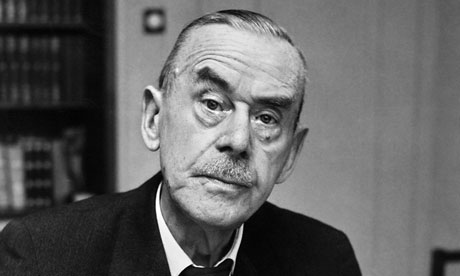
Well, after about four weeks of reading it, I finally finished Thomas Mann's 1900 novel Buddenbrooks.  Not too much I can say about it, really.  It's a long, downbeat account of four generations of a German grain-selling mercantile family in the 19th century.  Sounds like a winner, huh?  Yes, it's at times boring, but that's Mann for you - you get the long, glorious, rhapsodic passages and the glum, drawn-out fatalism, but also oodles of irony and detail, narrative heft and shape.  So I guess I liked it, but I wouldn't recommend it unless you were really interested in German literature of the early 20th century.  And not to give anything away, but, basically, everyone dies.

Magic Mountain may still be in my future; in fact, I think it's on my Life List of books to read.  So I'm not done with Mann yet.

Let's get to the movies opening this week:


The Dictator    Sacha Baron Cohen's new film isn't quite getting the fanatical praise Borat got, but it's getting above-average reviews.  Working with Borat director Larry Charles, the film (which co-stars Anna Faris, Ben Kingsley, John C. Reilly, and Megan Fox), it's about a clueless, oppressive North African dictator touring America.  Is Cohen's schtick getting old?  I have no desire to see this (and I didn't see Borat), but I have liked Cohen in the few films in which he's actually played sort-of normal characters: Sweeney Todd, Hugo.

Battleship    It seems like I've been seeing previews for Peter Berg's big-budgeted blockbuster based on the Hasbro board game for half a year.  The navy (represented here by Taylor Kitsch, Liam Neeson, Brooklyn Decker, True Blood's Alexander Skarsgard, Rihanna) must band together to fight a superior alien force.  Eh?  The chuckling, naysaying critics are deriding the film's poor writing and bad dialogue; it looks like so much junk.

What to Expect When You're Expecting    The trend of making romantic ensemble comedies out of nonfiction self-help books continues with this badly-reviewed, filmed-in-Atlanta piece inspired by Heidi Murkoff's 1984 pregnancy bible starring an attractive cast: Cameron Diaz, Jennifer Lopez, Elizabeth Banks, Dennis Quaid, Chris Rock, Anna Kendrick, Glee's Matthew Morrison (as Diaz's husband - who wears the pants in that relationship?), Gossip Girl's Chace Crawford, and, again, Brooklyn Decker.

The Samaritan    I'm staying away from this one only because I feel like I've seen it a thousand times before.  A prisoner (Samuel L. Jackson) gets released after twenty-five years and has a hard time staying on the straight and narrow, especially when a former partner comes calling with a job.  Filmed in grungier parts of Toronto (cool!), this film noir/action piece is said to be a good role for Jackson but strictly by-the-numbers.

Hysteria    This could be the surprise of the weekend (well, not in terms of box office...).  A shame it's not receiving good reviews, though, because it sounds like it could be fun.  A lighthearted drama set in Victorian London, it is about the medical revolution and the discovery of the vibrator.  Hysteria, you see, is caused by an "overactive uterus" that needs to be stimulated.  The film stars Hugh Dancy, Maggie Gyllenhaal, Like Crazy's Felicity Jones, Rupert Everett, Ashley Jensen, and Jonathan Pryce.


On we go with our photographers:

Weegee (Arthur Felig) (#37)

Born in Austria, Weegee grew up in NYC's Lower East Side.  He was a freelance press photographer who was given his nickname because of his magical, Ouija-like gift for arriving at crime scenes before the police did; in fact, he kept a police radio with him in his car.  He followed the city's emergency vehicles and was always around crime scenes.  He photographed movie premieres, hookers, crime scene onlookers.  He was self-aggrandizing, somewhat of an ambulance chaser.  He liked to stamp the backs of his photos with "Credit Photo by Weegee the Famous."  A 1992 movie, The Public Eye, starring Joe Pesci, was based on him.

Weegee at a murder scene
children sleeping on a fire escape


Don McCullin (#38)

The British McCullin (b. 1935) is one of the world's great war photographers.  His resume for shooting periods and events of conflict is astonishing: the Biafran Crisis in Nigeria in the late 1960s, the Vietnam War, the construction and fall of the Berlin Wall, the Mau Mau uprising in Kenya (see below), the Troubles in northern Ireland, the Falklands War.  He has won almost every award imaginable for his work.  He lives in Somerset, England.  The first photo below, taken in Biafra in 1969, was selected by Life magazine as one of the 100 Photographs that Changed the World.


Vietnam
building the Berlin Wall

I try not to allude or reference anything in here that my readers (and me, of course, too) know nothing about.  So what was the Mau Mau uprising in Kenya?

Well, it's still a controversial topic.  Last year, four eighty-something Kenyans started a lawsuit, claiming they were tortured and abused in detention camps during the 1950s; the claim for the lawsuit was first lodged in 2009.  Most of the world sees Britain as the villains in the decades-long quest for Kenyan independence; those who are pro-British of course see Britain as doing what it had to do to squelch the communists and murderers leading the uprising.

In the days when Kenya was still a British colony, Mau Mau was an underground militant nationalistic group, mostly peasants, that sought to drive whites out of Kenya.  Members of the group, most of whom were of the Kikuyu ethnic grouping, were veterans who had returned form war and found themselves unemployed.  The jobs they were promised were not to be' and many found themselves working as porters on European estates.  The Europeans within the country had taken most of the Kenyans' ancestral land, racially discriminated against them, initiated a system (kipande) that kept track up Kenyans' movements, excluded them from decisions, and heavily taxed them.

Within the Kenyan government, the members of the Mau Mau began to incite terror - looting and and murder.  Britain declared a state of emergency and sent in reinforcement to quell the insolent, violent members of the Mau Mau, who were killing citizens in the Nairobi suburbs who refused to take the required oaths of the Mau Mau.

Jomo Kenyatta, president of the Kenya African Union (one of Kenya's two major political parties) was arrested for managing the Mau Mau society.  Britain began to arrest Mau Mau activists by the thousands but the Mau Maus fought back.  To make matters worse, white settler groups already in Kenya were disenchanted by the lack of urgency and efficiency of the Brits, so they began to fight the Mau Maus too.

Britain kept at it, though; on April 24, 1954, over 40,000 Kikuyu tribesmen were arrested.  By 1956, the numbers kept coming in: Over 70,000 Kikuyus suspected of Mau Mau ties had been arrested, over 10,000 executed.  Kenyans continued to get killed and suffer in prison camps.

In 1959, the state of emergency in Kenya finally ended.

In 1963, Kenya was granted independence.  In 1964, it was declared a republic.  Jomo Kenyatta, after years of detention and hard labor, its first president.

What's still debated and mired in controversy is the number of Kenyans killed by the British, specifically in the prison and work camps.  The Kenya Human Rights Commission claims that 90,000 were either executed, tortured, or maimed during this period, over 160,000 detained in camps.
Others claim 11,000 were killed, others 25,000.

Less than forty white settlers were killed during this almost decade-long period of violence.  

Kenyans filing suits today claim they, and many other Kikuju's who were not Mau Mau, were displaced from their homes and villages, charged with crimes (and put in camps) without a trial, and subjected to, among other atrocities, castration, sexual violence, beatings, malnutrition.

You be the judge.

Thanks:
http://www.elateafrica.org/elate/history/maumau/maumauintro.html 
http://africanhistory.about.com/od/kenya/a/MauMauTimeline.htm
http://www.bbc.co.uk/news/uk-12997138  


And finally, let's start a new weekly column:

Things

Today:

5 Underrated Things

A funny, smart human comedy about a Yale student spending spring break working in his dad's lunch truck.


Is the CW's Hart of Dixie (starring Rachel Bilson, above), whose first season just ended, the most original, inventive, moving, or subtle show?  Nah.  But it is one show that premiered last fall on a non-cable network that I watched from beginning to end without missing an episode.  And I can't wait to for the new season this fall.


Bill Withers' second album, Still Bill, celebrates its fortieth anniversary this year and it still sounds Bill... I mean, great.  No bad tracks on it and plenty of enduring great ones ("Lovely Day," "Lean on Me," "Who is He," "Use Me").

You can spend the entire 88 minutes trying to figure out what the 2003 Gwyneth Paltrow-starring View From the Top is (a rom com? a pro-feminist thing? a period slapstick comedy?) and finally just abandon the pretense and admit that the whole thing is so infectious and breezy it doesn't matter.

Okay, come on, you do blistering, moving work as a cocaine addict in Clean and Sober, be grossly, balls-to-the-wall original in Beetlejuice, be the definitive Batman, and do creepy work as a the world's worst-tenant in Pacific Heights - all within two years. 

Tuesday, May 15, 2012

Natural High

Word of the day : stela : a usually carved or inscribed stone slab or pillar used for commemorative purposes

Soul Track of the Day:


"Natural High," by Bloodstone, off the group's 1973 album of the same name.  I fist heard this startlingly affecting, gorgeous, mood-setting song in Quentin Tarantino's Jackie Brown.  Formed in the early 1960s in Kansas City, the band was a funky soul band with inflections of gossip and (evidenced here) doo-wop.  The song, which got to high as #10 on the U.S. pop charts, was their highest-charting pop hit.  They were a nice bridge between classic soul and the funky, rock-influenced (read: Hendrix) black music of the 1970s.

http://www.youtube.com/watch?v=t0KzLo0-6Ro

Book Reviews


As good a compilation of stories by an American author that you'll read (one reviewer called it our country's version of Joyce's The Dubliners, although I think that's somewhat short thrift), The Collected Stories of Richard Yates (2001) is a breathtaking achievement.  The opus consists of two previously published short-story collections by the author (1962's Eleven Kinds of Loneliness, 1981's Liars in Love and nine previously uncollected stories); there are 27 stories in all.  Each one is a poignant, sensitive, never heavy-handed, detail-rich riff on frustration, loneliness, displacement, unhappiness, self-absorption and yet Yates never swathes us in gloom or hopelessness.   The same themes and characters tend to appear - lonely soldiers abroad, empty NYC businessman, adrift single mothers, self-destruction - but that's Yates's world: The time and place rarely changes in any of his work - New England/New York and its suburbs, post-WWII Europe - but what's remarkable, what grabs your attention over the trajectory of his ouevre, is the specificity and freshness he brings to characters you thought you've already read about.  No one evinces the American dream gone sour and futile quite like this.  He's funny too, and his dialogue is ridiculously spot-on; it's not good dialogue, let me make that clear, it's better than that: it's how distracted, confused, nasty, beleaguered, snippy, confused people actually talk. 

Standouts:
from Eleven Kinds of Loneliness:

- "Doctor Jack-'O-Lantern":  an orphaned boy is the new kid in school and finds it hard to get along with any of his classmates unless he starts telling fibs

- "No Pain Whatsoever":  a woman is taken by her boozy friends to visit her satisfied, preoccupied husband at a tuberculosis hospital

- "Fun With a Stranger": a stern, humorless elementary school teacher tries to reach out to her students in the days before Christmas break and ends up disappointing them

from Liars in Love:

- "Oh, Joseph, I'm So Tired": a divorced mother/untalented sculptor gets the chance to do a "bust" of FDR

- ""Trying Out For the Race": two divorced mothers pool their resources and decide to live together (along with their kids) in a small home in Scarsdale during the Depression

from the previously uncollected stories:

- "The Comptroller and the Wild Wind": a dissatisfied office worker tries to ask a nice waitress out on a date, unaware that he is pushing the boundaries. 

There are great writers who surprise us and tell great stories.  And then there are the writers who do more than even that, who present us, with fullness and clarity (ugly or not), a vision of the world.  Yates is the latter.

(****1/2)


And now for a strange one.  Evan S. Connell's (Mr. Bridge, Mrs. Bridge) peculiar, short novel lays out the successive stages of obsession.  Muhlbach, an insurance man from NYC, purchases a clay Aztec figure in a Taos curio shop.  He desires to know as much about it as he possibly can, consulting a professor in Santa Fe, buying books on pre-Colombian art.  Back in New York, he continues to read up on the object, on the history of the Aztecs and Olmecs and Mayans, attends an auction, purchases a jade Olmec mask that turns out to be a fake, and then spends the rest of the book talking with other dealers and sellers and trying to think what he wants to buy next. 

A most unusual character study, with pages and pages given over to information on pre-Colombian art, it's a frustrating book for a reader to get into (but it's not heard to read, by any means) because Muhlbach is so immersed in his obsession.  But Connell conveys his drive and need to know very well.  Connell obviously knows much about the world of art auctions, art dealers, the question of provenance, the eccentric individuals in the business of collecting.  Not much happens plot-wise, but it's an intelligent, lucid book that is hinged upon the question: If we buy something because we are aesthetically drawn to it and we later find out that it is fake or not entirely what we thought it was be, does that in any way dilute or diminish our initial flushed impressions, and, if so, why?  What does it mean to be fake?  By the end, we may even relate to Mulhbach's thirst for knowledge, his need to possess.  Haven't we all wanted something really bad?    

(***)

It is common knowledge that Howard Carter was the archaeologist who discovered the tomb of King Tut 90 years ago.  I had no idea that he was an artist too: 

http://www.smithsonianmag.com/history-archaeology/Howard-Carter-Famous-Archaeologist-Not-So-Famous-Painter.html


Monday, May 14, 2012

Garden of Earthly Delights

Word of the day : skulk : to move or hide in a stealthy manner

Our soul track today?


"Stop," by Howard Tate, a 1968 song that was one of six songs by Tate to hit the top 20 in the R&B charts.  Born in Macon, Georgia, Tate grew up in Philadelphia and was a well-regarded soul singer (Janis Joplin and Jimi Hendrix, among others, covered his songs) before his career fell apart in the early 1970s.  He was out of the business, mostly hampered by dug dependency throughout the 1980s, emerging in 2003 for a minor comeback; he released five albums in the oughts-decade and toured frequently before dying from leukemia in December of 2011.  Today, he is seen as a major soul singer by cultists and fans, but is virtually unknown by everyone else.   

http://www.youtube.com/watch?v=GlxbxcR1el0


Wow, did a stomach bug hit me last night.  I too must have picked up what Gabriel ever had coursing through him.  I had to lie in a fetal position in bed for a good hour.  Good God!  I couldn't do much but lay in bed and watch Unforgiven.

Author Profile:

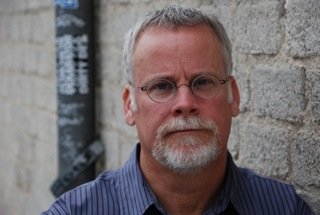
Michael Connelly


Born: Philadelphia, 1956.

Career:  Connelly grew up in Florida and after graduating the University of Florida in 1980 (majoring in journalism, minoring in creative writing), he was firmly convinced that he wanted to be Raymond Chandler.  He worked the crime beat for newspapers in Fort Lauderdale and Daytona Beach.  He was propelled into the upper tiers of journalism when a magazine story he and two other reporters wrote on the aftermath for the survivors of a major airline crash was shortlisted for a Pulitzer.  That story landed him in L.A., propelled to the position of crime reporter for the Los Angeles Times.

In 1992, he began writing mystery novels with a protagonist, Hieronymus (Harry) Bosch, who has, to date, anchored one of the most acclaimed, bestselling series of crime novels in modern literature.  Bosch, an orphaned Vietnam vet, became a member of the L.A.P.D. in 1972; Connelly, starting with 1992's award-winning The Black Echo up through this coming November's The Black Box (the 18th Bosch), has charted the course of Bosch's career in the force while cannily providing an in-depth survey of the changing landscape of law enforcement, the police force, and L.A.

Connelly also has an ongoing series featuring Mickey Haller, who first appeared in 2005's The Lincoln Lawyer.  Haller is a defense attorney who spends his days conducting his business in the backseat of his rolling Lincoln Town Car.

Noted Books:  In the Bosch series: probably the first few ones in the series, including The Concrete  Blonde (2004).  The 1996 The Poet, a non-Boscher starring reporter Jack McEvoy about a serial killer, and its 2004 follow-up The Narrows were both well-received.  Connelly's books are always bestsellers.

Themes, Style, Etc:  With Connelly, you get very little characterization.  His style is very streamlined, with little flab.  He takes you, detail by detail, through the course of a case.  The characters are usually tough, the investigations layered, the villains nasty, and there is usually one late twist or revelation in the case.  There is, of course, conflict between local cops and the FBI; occasionally, there's some romance.  Bosch is an appealing, likable character, though not a colorful, particularly interesting one.  I think Connelly is so popular because his books are well-thought out, they move well, and he is incredibly knowledgeable about cops, their lifestyles, the justice system, and L.A.

Two of his books, 1998's Blood Work and 2005's terrific The Lincoln Lawyer were made into movies starring, respectively, Clint Eastwood and Matthew McConaughey; the latter film is an underrated, well-cast, spiffily scored, tense knockout.

Why You Should Read Him:  Because he does what he does as well as anyone in the genre.  Sometimes I think his books are a little colorless, under-imagined, average TV episodes, but when he's rolling, he's outstanding and fun - the story is constructed so well, and he makes the reader feel smart as we emerge ourselves into this gritty, messy world.  I've read eight books by him. 

Books I Would Recommend:  The Lincoln Lawyer, 2005's The Closers (with Bosch working in the Open-Unsolved Unit, trying to piece together the 1988 murder of a mixed-race teenage girl), and 2008's The Brass Verdict - which partnered up Bosch and the Lincoln Lawyer!

Books I Want to Read:  2011's The Fifth Witness.

Author's Website:  http://www.michaelconnelly.com/   (where I got all my info)


We're still making our way through our 100 Influential Photographers.  We're going to speed it up a bit, so that maybe we can finish it by the end of the summer.  I'll just start giving the briefest, most basic of information and three examples of their work - unless I feel a particularly well-known artist demands more expanse. 

August Sander (#35)  

The German-born Sander's (1876-1964) most enduring work was his "People of the Twentieth Century," a lifelong project to document the people of his native Westerwald, near Cologne, Germany.  He photographed all walks of life, 600 people; the series was later banned by the Nazis because it didn't adhere to Hitler's conception of the Aryan type.

an architect and his wife


Korps student
farmhand

Nan Goldin (#36)

Goldin, born in Washington D.C. in 1953, grew up in Boston and went to school in NYC.  She had a troubled youth:  her older sister committed suicide by laying down on the railroad tracks; she lived with foster families and spent a lot of time in communes.  As an artist, Goldin is best-known for photographing (which is often then presented to viewers in a slideshow) her friends, her surrogate family, in various acts of illicit, illegal behavior - pornography, drugs, etc.  Often these poses mimic those in fashion magazines.  She is a master of the grunge scene, of the downtown, wigged-out NYC milieu of druggies, transvestites, and hangers-on.


Sunday, May 13, 2012

Birds, Bon Jovi, Bar-Kays, B-Ball


Word of the day : recalcitrant : obstinately defiant of authority or restraint ; difficult to manage or operate ; resistant

Loved the Atlanta Zoo!  The family also really enjoyed the Silver Skillet, the Atlanta diner we went to that is famous in the city for its longevity, its good food, and its uniqueness that has been made the restaurant a prominent must for filmmakers, TV shows, Food Network featurettes. 

http://www.thesilverskillet.com/

At the zoo, I always tend to seek out the birds before the animals.  At the Atlanta Zoo, I saw some unique ones: 

King Vulture
Kori Bustard
Ground Hornbill
Wreathed Hornbill
Cassowary


Book Review


If you're like me and you're game for making your way through the entire oeuvre of Patricia Highsmith, I still wouldn't recommend paying any mind to her latter-day work Found in the Street (1986).  It's a turgid, disappointing work, glacially paced, with unappealing characters.  In NYC, a bizarre loner, Ralph, finds a missing wallet and returns it to its owner, Jack Sunderman, a book illustrator.  Jack, who has a wife who works in an art gallery and a daughter (whom the childless Highsmith, with either cluelessness, contempt, or weak satire, miserably treats as an oh-by-the-way), meets  a twenty-year old waitress who, it turns out, is being stalked by Ralph, who mistakenly thinks the free-spirited, ambitious Elsie is prostituting her life away.  As Elsie becomes a model, all the characters become infatuated with her.  Eventually, there's a murder.       

There are moments here - great, squirmy moments, elegantly blunt lines - that are pure Highsmith, and she keeps us on edge with her typically slow-burning style.  The joke's on us, though, as there's little to no payoff.  The author likes to have a terrible act/crime/murder emerge out a surfeit of ordinariness and same old-same old days - but here the plot turns far too slowly.  I kept browsing ahead, waiting for someone to get brutally whacked - for anything to happen, anything to dispel the boredom.  We don't like or sympathize with any of the characters.  Highsmith is a patient, often nasty writer, and she can be bleakly funny too, but I couldn't get over how cloddish and out-of-touch the whole thing feels, from the swinging morelessness of the setting to the flat characters; even Ralph, the most interesting character around, resembles an amalgamation of past Highsmith wackos.  A disappointment all around from a great writer. 

(**) out of 5     


Movie Reviews


The Vow (2012)

Inspired by true events (which means at least 75% of it is made up), this romance stars Channing Tatum as the owner of a recording studio in Chicago.  Rachel McAdams is his wife, an artist who is cut off from her family.  When McAdams loses her recent memory in a car accident, Tatum has to get her to fall in love with him again, despite the fact that she has no idea who he is.  Her family (led by Jessica Lange and Sam Neill) try to step in and separate the two, bringing McAdams back home with them in the suburbs.  You know where it's all headed - of course, Rachel's love for Channing will be reunited - but, as usual for this type of film, the pleasure (if indeed you find any pleasure in it - or in romances in general) is in watching the characters get there.  And the characters are very likable - Tatum, with his athletic physique and husky diction, is understated, earnest; the more polished McAdams is typically appealing.  The movie doesn't really bear close scrutiny but it's an easy film to watch and the Chicago locations are always welcome.

(***) out of 4


New Year's Eve (2012)

As long as the schlocky Garry Marshall continues to make movies, we'll be okay if we get efforts as harmless and non-offensive as New Year's Day, which is more or less a follow-up to Marshall's 2010 charming and much fresher Valentine's Day.  This movie's kind of dumb, sloppy, forced, but I don't really mind the sheer inconsequentialness of it all; it has a glossy, happy, fast-moving thrust, and there's always an interesting performer on screen.  It's almost impossible not to sort-of enjoy, though it vanishes from mind pretty quickly.  The cast: Hilary Swank as the woman responsible for the New Year's Eve Time Square ball dropping; Robert DeNiro as a dying man with a last wish to see the ceremony; Halle Berry is his doctor; Michelle Pfeiffer is a disgruntled, unhappy music company worker; Zac Efron is a courier who tries to fulfill Michelle's lifelist ("see Balie," etc.) in one day; Sarah Jessica Parker is the harried mother of teenage Abigail Breslin; Ashton Kutcher is a slacker who finds himself trapped in an elevator with backup singer Lea Michele; Katherine Heigl is a high-profile chef who hasn't gotten over last year's New Year's Eve dumping by Jon Bon Jovi; Jessica Biel and Sarah Paulson are pregnant and trying to earn the $25,000 prize awarded to the first mother who gives birth in the New Year; Carla Gugino is their doctor.  Let's not forget about John Lithgow, Alyssa Milano, Sofia Vergara, Josh Duhamel, Common, Cary Elwes, Cherry Jones, James Belushi, and Ryan Seacrest either.  If you don't like one storyline, the next one will be along in a minute.

(**)

All right, here's a soul number for the day.

   
"Soul Finger," by the Bar-Kays.  Or shall I say "Soul Finger!!!"  Written by Booker T. Jones and Steve Cropper, the song, off of the 1967 album of the same name, went to #17 on the Billboard Top 100 chart.

The Bar-Kays were formed in Memphis as a house band at Stax Records.  The band did double-duty as a house band and a a self-contained group.  Soul Finger was the only studio album the original line-up ever made together before the 1967 plane crash that killed Otis Redding and four members of the Bar-Kays, who were working as his backup band.  They are similar to Booker T & the MGs - their songs are usually instrumentals.  

http://www.youtube.com/watch?v=EYqlOfzDsK8&feature=related 


All right, I was a bit presumptuous by picking the NBA playoffs comprehensively and not on a round-to-round basis.

The second round is here now.   I correctly predicted 5 of the 8 first-round winners - Atlanta disappointed me, Chicago tanked once Rose went down, and the Memphis-Clippers series could have gone either way for me and unfortunately went the way of the Clips.

In the East,

Miami will beat Indiana 4-2.
Boston will beat Philadelphia 4-2.

In the West,

San Antonio will beat the L.A. Clippers 4-1.
Oklahoma City will beat the L.A. Lakers 4-2.